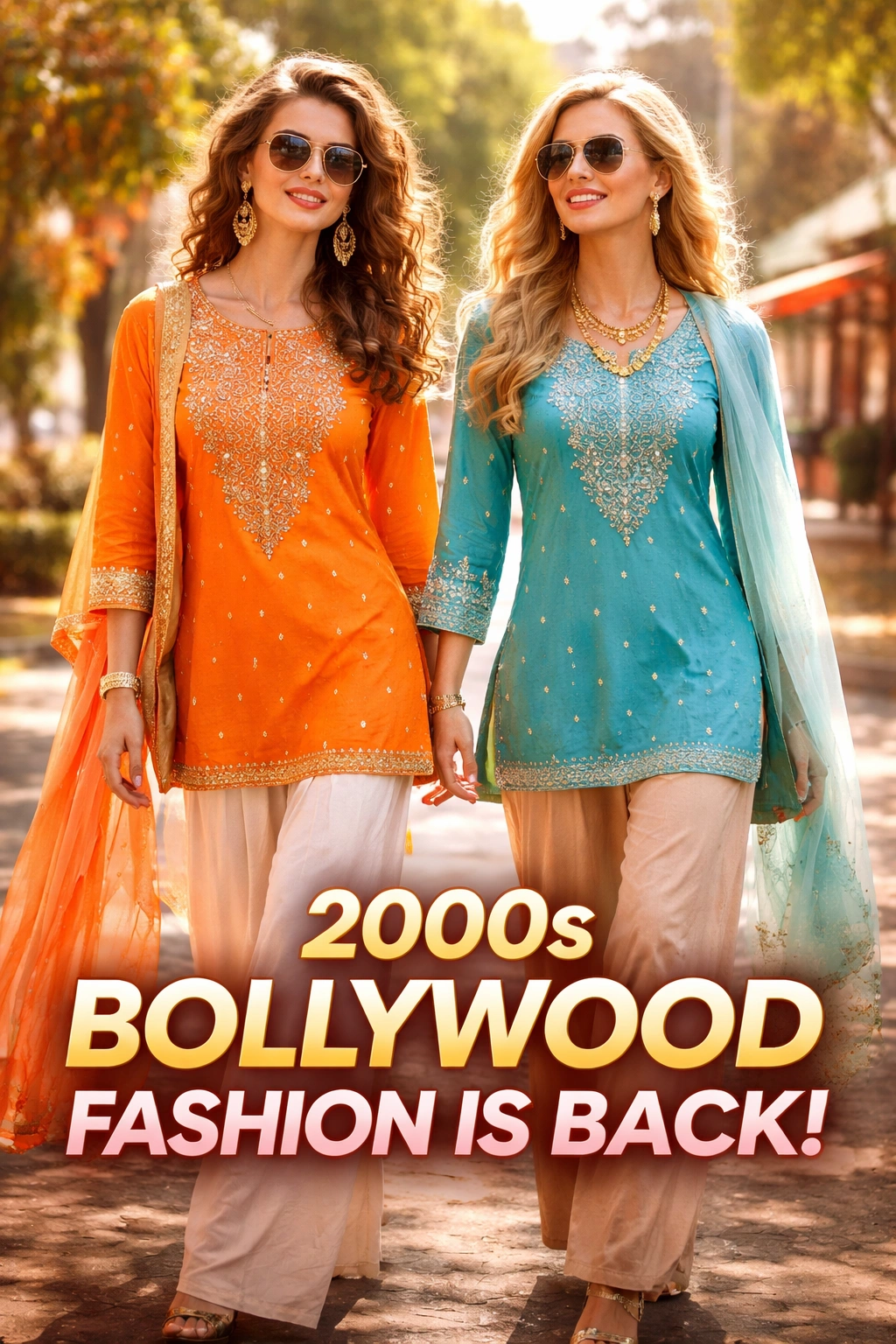
The West Is Finally Catching On to 2000s Bollywood Fashion
Fashion is cyclical, constantly revisiting past trends and reinterpreting them for new generations. In recent years, the global fashion industry has increasingly looked toward South Asia for inspiration, and one of the most notable revivals is the resurgence of 2000s Bollywood fashion in Western wardrobes. What was once a defining style of Indian cinema is now finding its place on international runways, social media platforms, and street style across major fashion capitals.
The effortless charm of early 2000s Bollywood outfits—marked by short kurtas, flared pants, and flowing dupattas—has re-emerged as a fresh and versatile aesthetic. This revival not only reflects nostalgia but also highlights the growing influence of Indian fashion on global trends.
The Signature Style of 2000s Bollywood
The fashion of 2000s Bollywood was characterized by a unique blend of tradition and modernity. Outfits often featured well-fitted kurtas that ranged from long, elegant silhouettes to shorter, top-like designs. These were typically paired with loose or flared pants, creating a balanced and comfortable look.
The addition of a dupatta, casually draped around the neck or shoulders, added an element of grace without feeling overly formal. This style was neither entirely traditional nor completely Western—it occupied a space that felt accessible, adaptable, and stylish.
What made this trend stand out was its versatility. It could be dressed up for festive occasions or toned down for everyday wear. This adaptability played a significant role in its popularity during the early 2000s.
Bollywood Icons Who Defined the Era
Several Bollywood celebrities were instrumental in popularizing this fashion trend. Kareena Kapoor Khan became a style icon of the time, often seen wearing chic kurta sets that blended comfort with elegance. Her looks in films and public appearances helped shape the fashion choices of an entire generation.
Similarly, Aishwarya Rai Bachchan brought a sense of sophistication to these outfits. Her ability to carry both traditional and contemporary styles with ease made her a global fashion influence.
These celebrities did more than just wear clothes—they set trends that were widely emulated. Their outfits reflected a broader cultural moment where Indian fashion was evolving to meet modern sensibilities while retaining its roots.
Why the Trend Is Returning Now
The resurgence of 2000s Bollywood fashion in the West can be attributed to several factors. One of the primary reasons is the global shift toward comfort-driven fashion. Loose silhouettes, breathable fabrics, and versatile styling have become increasingly important, especially in the post-pandemic era.
Another key factor is nostalgia. Fashion enthusiasts often revisit past trends, reinterpreting them with a contemporary twist. The early 2000s, in particular, have seen a major revival across various styles, from low-rise jeans to crop tops—and Bollywood-inspired outfits are now part of this movement.
Social media has also played a crucial role. Platforms like Instagram and TikTok have amplified global fashion trends, allowing styles from one region to quickly gain popularity worldwide. Influencers and designers are showcasing South Asian-inspired looks, making them more accessible to international audiences.
Western Fashion’s Growing Interest in South Asian Aesthetics
The Western fashion industry has increasingly embraced diversity and cultural exchange, leading to a greater appreciation of South Asian aesthetics. Designers are incorporating elements such as embroidery, flowing fabrics, and layered silhouettes into their collections.
The kurta-and-pants combination, once primarily associated with Indian wear, is now being reimagined in Western contexts. It is being styled with modern accessories, paired with sneakers or boots, and adapted to suit different climates and occasions.
This shift reflects a broader trend of globalization in fashion, where cultural boundaries are becoming less rigid. As a result, styles that were once considered niche are now entering mainstream fashion conversations.
The Role of Comfort and Versatility
One of the strongest appeals of 2000s Bollywood fashion is its comfort. Unlike restrictive clothing, these outfits allow for ease of movement while still maintaining a polished appearance. This aligns perfectly with current fashion preferences, where practicality is as important as aesthetics.
The versatility of these outfits also contributes to their renewed popularity. A short kurta can be styled as a top, paired with jeans or trousers, while flared pants can be mixed and matched with various tops. The dupatta, meanwhile, can be worn in multiple ways or even omitted for a more minimal look.
This adaptability makes the style suitable for a wide range of occasions, from casual outings to semi-formal events. It is this balance of comfort and elegance that has helped the trend gain traction in the West.
Cultural Influence and Representation
The growing popularity of Bollywood-inspired fashion in the West also highlights the importance of cultural representation. As global audiences become more exposed to Indian cinema and culture, there is a greater appreciation for its artistic and stylistic contributions.
Bollywood, as one of the largest film industries in the world, has long been a source of fashion inspiration. Its influence is now extending beyond regional boundaries, shaping global trends in a meaningful way.
However, this cultural exchange also raises important conversations about authenticity and respect. It is essential for designers and consumers to acknowledge the origins of these styles and appreciate them in their proper context.
Modern Adaptations of the Classic Look
While the core elements of 2000s Bollywood fashion remain intact, modern adaptations have introduced new variations. Contemporary designs often feature updated cuts, innovative fabrics, and subtle embellishments.
For example, shorter kurtas are now being styled as tunics or crop tops, while flared pants have evolved into palazzos and wide-leg trousers. The dupatta, once a staple, is sometimes replaced with scarves or omitted altogether for a more streamlined look.
These updates ensure that the style remains relevant to today’s fashion landscape while retaining its original charm. The fusion of traditional and modern elements creates a dynamic aesthetic that appeals to a global audience.
The Future of Bollywood-Inspired Fashion
The revival of 2000s Bollywood fashion in the West is not just a passing trend—it signals a deeper shift in the fashion industry. As cultural influences continue to intersect, styles from different parts of the world will increasingly shape mainstream fashion.
This trend also opens up opportunities for Indian designers and brands to gain international recognition. By showcasing their heritage and craftsmanship, they can contribute to a more inclusive and diverse fashion ecosystem.
Looking ahead, it is likely that Bollywood-inspired fashion will continue to evolve, blending with other global trends to create new and innovative styles. Its emphasis on comfort, versatility, and cultural richness ensures its lasting appeal.
Conclusion
The resurgence of 2000s Bollywood fashion in the West is a testament to the timeless appeal of its design elements. From short kurtas and flared pants to the graceful drape of dupattas, these styles have proven their ability to transcend cultural and geographical boundaries.
Driven by nostalgia, comfort, and global connectivity, this trend highlights the increasing influence of Indian fashion on the world stage. As it continues to evolve, it not only celebrates the past but also paves the way for a more inclusive and interconnected future in fashion.
Ultimately, what was once a defining look of Bollywood is now becoming a global style statement—bridging cultures and redefining modern fashion.
 By admin