What was discovered
In 2020, scientists in the Netherlands reported evidence of what they called a pair of previously unrecognized glands in the nasopharynx, behind the nose and throat region. These were observed while using an advanced imaging method known as PSMA PET/CT (Prostate-Specific Membrane Antigen positron emission tomography/computed tomography), which is usually used to detect prostate cancer metastasis.
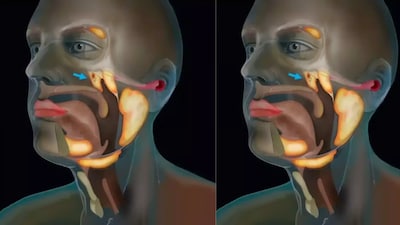
These glands were named tubarial glands (or tubarial salivary glands) and are located near the torus tubarius (a cartilage ridge near the opening of the auditory/Eustachian tube) in the nasopharynx. In imaging of around 100 prostate cancer patients, these glands lit up consistently.
Histological studies in a small number of cases showed glandular tissue compatible with secretory function. The glands appeared mostly mucous (rather than serous) in nature. Researchers proposed that these glands may help moisten and lubricate the nasopharynx and oropharynx region.
Why this matters in cancer treatment
The discovery has potential clinical relevance, particularly for radiation therapy for head and neck cancers:
-
Known salivary glands (parotid, submandibular, sublingual) are organs at risk during radiation therapy. Damage to them can lead to dry mouth, difficulty swallowing, impaired speech, dental issues, infection, and reduced quality of life.
-
The tubarial glands lie in a region not commonly spared in radiation therapy planning. If these glands significantly contribute to lubrication of the throat, then radiation damage to them might explain some side effects even when the known salivary glands are spared.
-
In early studies, researchers found that patients whose treatment delivered higher radiation doses to the tubarial gland region experienced more severe complications like dry mouth and swallowing difficulties. This suggests that sparing this region when possible might reduce these side effects and improve quality of life.
TrendBent.com | celebschatterbox.com | technewspro.net
kkongland.com | CasinoCascades.com | MakeHappyFamily.com
Confirmations, Critiques, and Open Questions
It’s not straightforward; the discovery has prompted both supportive studies and skepticism.
Supporting evidence
Histological analyses in cadaveric tissue have identified glandular structures, ducts, and markers consistent with salivary tissue in the tubarial region. These glands show characteristics similar to minor salivary glands, with a predominance of mucous cells.
Criticism and doubts
Some anatomists argue that the structures identified are not new, but rather known glands that have been described before but not well characterized in imaging. Key features that define major salivary glands, such as lobular organization and a fully developed ductal system, are not always clearly demonstrated.
Other researchers note that sample populations so far have been limited, many patients were male (since imaging was related to prostate cancer), and there were very few cadaver studies. The imaging method used highlights PSMA-expressing tissues, but PSMA expression is not unique to salivary glands, so functional confirmation is essential.
Consensus status
There is no universal agreement that the tubarial glands are a fully distinct “major” salivary gland pair like the parotid or submandibular glands. Some researchers prefer to call them a “new organ at risk” for radiotherapy, acknowledging their clinical relevance without fully classifying them as a new organ.
Recent findings: how much do these glands contribute?
Recent studies suggest that while these glands are visible in most PET/CT scans, their functional output might be modest compared to larger salivary glands. However, even a modest contribution to throat lubrication may still be clinically meaningful, especially during cancer treatment.
Implications for Cancer Treatment
Here are ways this discovery could influence cancer therapy, especially head and neck radiotherapy:
-
Radiotherapy planning adjustments
Radiation plans might be modified using advanced techniques to spare or reduce dose to these tissues. -
Dose-toxicity models updated
Including these glands in treatment planning may improve predictions of side effects and allow better patient counseling. -
Imaging and diagnostics
Imaging protocols might be refined to visualize the glands in individual patients before treatment for better planning. -
Sparing techniques / new RT technologies
Modern radiation delivery techniques like intensity-modulated radiotherapy or proton therapy could help avoid high doses to these glands. -
Improved quality of life
Sparing these glands could reduce complications like dry throat, swallowing difficulty, and sticky saliva, improving comfort and overall well-being. -
Research into other diseases
There is interest in whether these glands might be involved in conditions like Sjögren’s syndrome or affected by other therapies.
What still needs to be resolved
To fully integrate this knowledge into clinical practice, several issues remain:
-
Functional validation: Measuring how much secretion these glands produce and whether it is significant for overall throat lubrication.
-
Clinical trials: Studies are needed to prove that sparing these glands during radiation therapy actually improves patient outcomes.
-
Broader studies: Including women, diverse populations, and more cadaver samples to verify anatomy and prevalence.
-
Anatomical mapping: Precisely defining their borders, ducts, blood supply, and nerve supply for accurate treatment planning.
-
Definition debate: Deciding whether this structure qualifies as a new “organ” or is simply a cluster of existing minor glands.
-
Standardization: Establishing clear imaging and contouring guidelines for radiotherapy planning.
Broader implications & significance
This discovery reminds us that human anatomy is still evolving as a science. It shows how modern imaging can reveal structures missed by older techniques. It also underlines the importance of balancing cancer cure rates with quality of life, as sparing critical structures can make recovery easier for patients.
If accepted, this discovery could lead to updates in anatomy textbooks, cancer treatment guidelines, and medical education.
Bottom Line
The discovery of the tubarial glands is an exciting development that could improve outcomes for cancer patients. Although some scientists debate whether this is truly a “new organ,” most agree that these structures are clinically significant. More research will confirm their function and help determine the best way to protect them during cancer therapy.