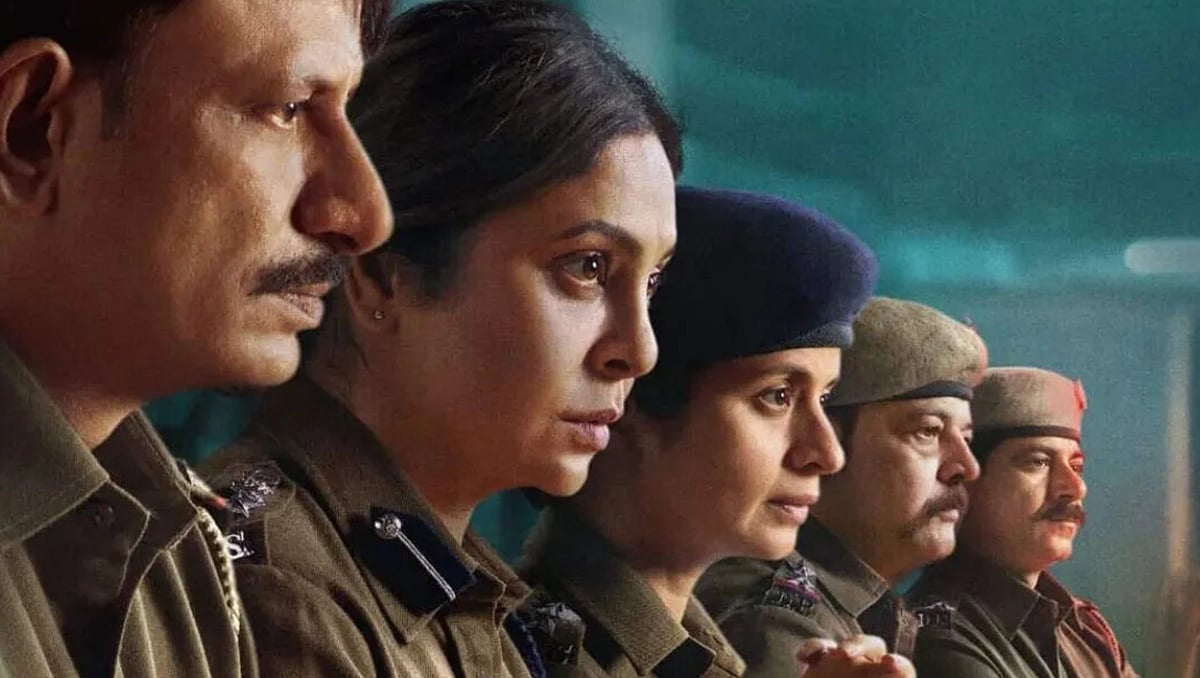
The Indian web series Delhi Crime has carved a niche for itself as one of the most realistic and hard-hitting crime dramas on streaming platforms. With the launch of its third season, the series continues to push boundaries, but this time, it focuses on a theme rarely explored in Indian crime shows: the role of women in the world of crime and justice. In Delhi Crime 3, women take center stage not only as victims but also as enforcers of the law and even as perpetrators, offering a nuanced view of gender, power, and morality in the context of Delhi’s crime landscape.
Women at the Forefront of Crime Drama
In many crime dramas, women are either side characters or victims, often existing merely to advance the male protagonist’s story. Delhi Crime 3 challenges this convention by placing women in all three key roles: the cop, the criminal, and the victim. This narrative choice allows the series to explore the complexities of each role and how society’s expectations influence the decisions and lives of women.
The show opens a conversation about how women navigate systems of power, sometimes constrained by societal norms and institutional challenges, yet capable of asserting agency in remarkable ways. By presenting women across these contrasting roles, Delhi Crime 3 blurs the traditional lines between morality and criminality, forcing viewers to confront the idea that gender does not inherently dictate ethical behavior.
toppostng.com | gisthabit.com | cialisonlinetips.com
labelsuperrecords.com | HotelMargHeRitaIschia.com
Women as Law Enforcers
At the heart of Delhi Crime 3 is a strong female police officer, whose character embodies resilience, intelligence, and empathy. Unlike stereotypical portrayals of female officers in popular media, who are often depicted as emotional or secondary to male counterparts, the series presents a cop who is decisive, strategic, and deeply committed to justice.
Her challenges are multifaceted. Professionally, she faces bureaucratic red tape, corruption, and the constant pressure to solve high-stakes cases. Personally, she must navigate societal expectations about femininity, family roles, and the balance between personal and professional life. By presenting a female cop with depth and vulnerability, Delhi Crime 3 highlights the often-unseen struggles that women in law enforcement face, particularly in a patriarchal society.
Women as Criminals
Equally significant is the depiction of women as criminals. In a genre dominated by male antagonists, the series introduces female characters who engage in criminal activity, not simply as pawns or accomplices but as fully-realized perpetrators with their own motivations, ambitions, and flaws.
These characters challenge viewers’ preconceived notions about women and crime. The series emphasizes that women can exercise agency, make morally ambiguous choices, and assert power in ways traditionally reserved for men in crime dramas. By doing so, Delhi Crime 3 opens up discussions about how societal pressures, economic circumstances, and personal histories can influence criminal behavior, irrespective of gender.
Women as Victims
Of course, women as victims remain a central theme, reflecting the harsh realities many face in society. Delhi Crime 3 does not shy away from portraying the trauma, vulnerability, and societal victim-blaming that women endure. However, it distinguishes itself from typical victim narratives by portraying resilience, solidarity, and empowerment. Victims are shown as individuals with agency, capable of contributing to investigations or reclaiming their power in meaningful ways, rather than simply existing as passive figures.
By juxtaposing the experiences of victims, criminals, and law enforcers, the series creates a rich, layered narrative that challenges viewers to think critically about gender, justice, and morality.
Social Commentary and Realism
One of the hallmarks of the Delhi Crime franchise is its commitment to realism. Season 3 continues this tradition by exploring not just individual crimes but the societal and systemic forces that shape them. Issues such as patriarchal norms, gender inequality, corruption, and institutional inefficiency are explored through the lens of women’s experiences.
The series highlights how societal expectations influence women’s roles, often limiting choices or imposing unfair standards. For instance, a female officer might be questioned about her appearance or personal life in ways that male colleagues are not. A female criminal might face harsher judgment from society, regardless of her motivations. And female victims often contend not only with trauma but with societal skepticism and blame.
By embedding these realities into its storytelling, Delhi Crime 3 elevates itself from a mere crime procedural to a commentary on social structures and cultural norms. It encourages viewers to reflect on how gender intersects with crime, justice, and morality in India.
Strong Performances and Character Development
The success of Delhi Crime 3 also lies in its nuanced performances. The actors portraying female cops, criminals, and victims bring depth and authenticity to their roles. Their performances capture the complexity of human emotions—fear, anger, courage, and vulnerability—while maintaining the tension and suspense integral to crime drama.
Character development is a key strength of the series. Rather than reducing women to archetypes, the show invests time in their backstories, motivations, and internal conflicts. Viewers are invited to empathize with characters across the spectrum, understanding that circumstances, choices, and societal pressures shape behavior, rather than simply assigning moral labels.
Breaking Stereotypes
By presenting women in these three roles, Delhi Crime 3 actively challenges stereotypes that have long dominated crime dramas. It demonstrates that women can be powerful, morally complex, and central to narratives about crime and justice. The series refuses to simplify female characters into binaries of “good” or “bad,” instead presenting them as multi-dimensional individuals navigating a complex social landscape.
This approach is particularly significant in the Indian context, where media representations of women often reinforce traditional roles or limit agency. Delhi Crime 3 offers a progressive perspective that both entertains and educates, promoting conversations about gender equality, societal expectations, and the realities of women’s experiences in India.
Cinematic Style and Storytelling
In addition to its thematic depth, Delhi Crime 3 maintains high production values, with cinematic direction, sharp editing, and a compelling soundtrack that heightens tension and immerses viewers in the narrative. The pacing is deliberate, allowing character moments and social commentary to unfold without compromising suspense or drama.
The series skillfully balances procedural storytelling with personal narratives, ensuring that crime-solving remains central while giving ample space to explore the social, psychological, and emotional dimensions of its female characters.
Cultural Impact
Delhi Crime 3 is not just a series; it’s a cultural statement. By positioning women at the center of its narrative, it encourages broader societal reflection. Discussions about female agency, systemic inequality, and the complexity of morality are likely to extend beyond the screen, sparking dialogue among viewers, critics, and cultural commentators.
The series also contributes to a growing trend in Indian media that foregrounds strong female characters, whether as protagonists, antagonists, or complex supporting roles. It demonstrates that audiences are receptive to nuanced storytelling that challenges conventions and explores underrepresented perspectives.
Conclusion
Delhi Crime 3 succeeds in rewriting the crime drama narrative by presenting women as cops, criminals, and victims. It challenges traditional stereotypes and highlights how society shapes women’s roles in crime and justice. Through compelling performances, realistic storytelling, and social commentary, the series creates a rich, multi-layered narrative that entertains while provoking thought.
By foregrounding women across the spectrum of crime, the series not only elevates the genre but also contributes to broader conversations about gender, power, and morality in contemporary India. For viewers, Delhi Crime 3 offers a gripping, thought-provoking experience that redefines expectations for crime dramas and showcases the transformative potential of strong, multi-dimensional female characters.
With its bold narrative choices, attention to detail, and commitment to realism, Delhi Crime 3 sets a new benchmark for Indian crime dramas, proving that stories about women in crime can be both compelling and socially relevant.