Political strategist-turned-activist Prashant Kishor has once again stirred a major conversation in Bihar’s political landscape with his recent remarks on the Assembly election results. Speaking in an interview with India Today TV, Kishor made a bold claim that the Bihar polls were rigged, but admitted that he does not have concrete proof to legally establish the allegation. His statements have triggered widespread debate, reigniting discussions around electoral fairness, ground-level political tactics, and voter influence.
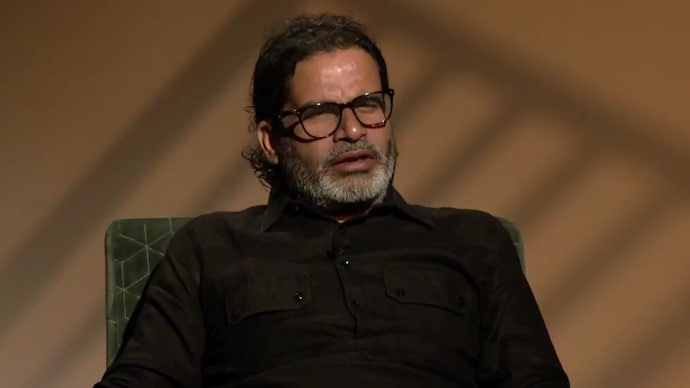
Kishor’s comments come at a time when Bihar has been witnessing political volatility, shifting alliances, rising public dissatisfaction, and major ideological battles between ruling and opposition blocs. By directly accusing the National Democratic Alliance (NDA) of “buying votes,” he has placed a strong question mark over the integrity of the electoral process in the state.
The Accusation: Rs 10,000 Distributed to Women Voters
One of Kishor’s most striking claims is that the ruling NDA distributed ₹10,000 each to women voters in the final days leading up to the polling. According to him, this last-minute distribution of cash was instrumental in swaying voter sentiment and altering the outcome.
Kishor highlighted that women voters form a decisive block in Bihar’s electoral arithmetic. Over the past few years, they have shown higher voter turnout compared to men. Welfare schemes, targeted incentives, and cash support have been key tools in shaping their voting behaviour.
He alleged that the cash distribution was done “quietly and strategically,” especially in rural pockets, where financial vulnerability makes voters more susceptible to such influence. While he clarified that he cannot produce documented proof, he insisted that his assessment is based on “strong ground intelligence” collected by his team during fieldwork.
WeExplore.net | PayArticles.com | articlewritter.com
abletonventures.com | jewel-tiffany.com
Why Prashant Kishor’s Words Matter
Prashant Kishor is not just another political observer. He is one of India’s most influential election strategists. From the 2014 Narendra Modi campaign to several state-level victories, Kishor has played a key role in shaping modern political strategies. His claims, therefore, carry added weight.
Kishor is currently leading the Jan Suraaj movement in Bihar, a grassroots initiative aimed at political and social reform. Over the past few years, he has been vocal about the problems in Bihar’s governance, economic development, caste-based politics, and electoral ethics.
His criticism of the election process is part of a wider narrative he has been building—that Bihar needs a transformational and transparent political overhaul.
Electoral Rigging: Why It’s Hard to Prove
While Kishor’s allegations have gained traction, his admission of “no hard proof” raises questions. Electoral rigging, especially in the form of cash distribution, is notoriously difficult to establish. Such practices often happen at the local level, managed by grassroots workers rather than party leadership. Transactions are informal, undocumented, and designed to avoid legal scrutiny.
Moreover, voters rarely come forward to openly admit taking money, as they fear legal repercussions. Agencies typically act only when there is solid evidence—videos, documents, or seizures of cash—none of which have surfaced so far in this case.
Despite this, Kishor claims that the “scale and timing” of voter shifts strongly suggest external influence.
Political Reactions: Expected Finger-Pointing
The NDA is expected to strongly rebut the allegations, positioning them as “baseless, politically motivated, and irresponsible.” No ruling party wants to be publicly associated with vote-buying.
Opposition parties, however, may use Kishor’s claims to strengthen their narrative that the election was unfair and that state resources were misused to influence voters. They have long alleged that elections in Bihar are influenced by financial inducements, targeted welfare schemes, local pressure groups, and caste loyalties.
Kishor’s remarks provide them fresh ammunition, even if not backed by explicit evidence.
Women Voters: The Decisive Factor
Bihar’s politics over the last decade has seen a massive rise in the influence and participation of women voters. Schemes like:
-
free cycles and uniforms
-
cash transfers for school attendance
-
cooking gas subsidies
-
“Jal-Jeevan-Har Ghar Nal”
-
improved surveillance on domestic violence
-
and promises of job creation
have been central to shaping their support.
If Kishor’s claim is true, targeting women voters with cash would not just be strategic but extremely impactful.
Bihar’s Political Climate: Why Allegations Matter Now
Bihar is currently in a phase of political transition. Unemployment, migration, poor health infrastructure, and weak education systems remain long-standing issues. At the same time, caste-based mobilization continues to dominate electoral decisions.
If voters believe the electoral process itself is compromised, public trust can further erode. Such claims deepen cynicism, especially among youth who are already frustrated with limited opportunities and governance challenges.
Kishor’s remarks, therefore, place attention not just on vote-buying but on the larger question:
Is the electoral system delivering a fair reflection of the people’s will?
Kishor’s Political Signalling
While stating that he has no legal evidence, Kishor’s decision to voice these concerns publicly suggests a strategic move. He is positioning himself as:
-
a critic of the ruling establishment
-
a reform-oriented voice
-
a leader who wants to expose flaws in governance
-
and someone who stands with the people rather than with political elites
This aligns with his larger goal of building Jan Suraaj as a credible alternative political force in Bihar.
Electoral Ethics: A Debate India Must Have
Whether or not Kishor’s claims get validated, they raise important questions:
-
Should voter inducement—even through welfare schemes—be regulated more strictly?
-
Can the Election Commission do more to monitor cash transactions during the poll period?
-
Are voters aware of the long-term consequences of selling their vote?
-
Does the current electoral framework favour ruling parties disproportionately?
India often celebrates high voter turnout as a sign of democratic health. But turnout alone doesn’t guarantee fairness.
Conclusion: A Claim That Opens a Larger Conversation
Prashant Kishor’s statement that the polls were rigged but cannot be proven sits at the intersection of allegation and reality. It may never be legally verified, but it forces the public and political leaders to confront deeper issues about electoral transparency in India.
As Bihar continues its political journey, the conversation sparked by Kishor could influence future reforms, voter awareness, and even the strategies of political parties.
For now, his remarks have ensured one thing — the debate around the latest Bihar elections is far from over.