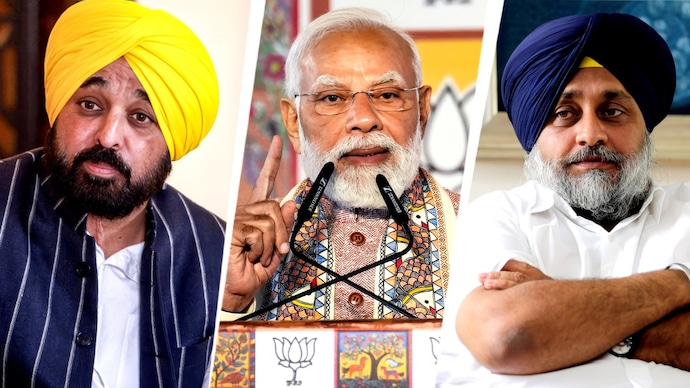
The central government has withdrawn its earlier stance on a proposed administrative change involving Chandigarh after a massive political backlash erupted across Punjab. What started as a routine government consideration turned into a major controversy, drawing criticism from almost every major political party in the state. The Centre later clarified that no final decision has been made, signalling a pause in the process.
Background: Why Chandigarh Is a Sensitive Issue
Chandigarh is not just another Union Territory. It was created in 1966 as a planned city to serve as the capital of both Punjab and the newly formed Haryana. Over the decades, however, the city has become the centre of emotional, political, and administrative disputes between the two states.
Punjab, in particular, considers Chandigarh an integral part of its heritage and claims the city should eventually return to Punjab’s full control. Haryana, on the other hand, continues to assert its equal rights over the city. Because of this delicate balance, even small administrative changes tend to attract strong political reactions.
Shoppingscarts.com | factsfuzz.com | thescopeblog.com
squaremyhealth.xyz | weblimon.com
The Proposal That Triggered the Controversy
The controversy began when reports suggested that the Centre was considering certain administrative changes in Chandigarh’s governance framework. Though the full details were not public, even the hint of change alarmed political parties in Punjab.
Many leaders interpreted the proposal as an attempt to undermine Punjab’s long-standing claim over the city. As soon as the news surfaced, strong objections poured in from nearly all major political groups.
A Rare Moment of Unity in Punjab Politics
One of the most striking outcomes of the controversy was the unusual unity displayed by political parties in Punjab. Despite deep political rivalries, the Aam Aadmi Party (AAP), Congress, Shiromani Akali Dal (SAD), BJP dissidents, and various farmer organisations all sharply opposed the Centre’s proposal.
Leaders held press conferences, issued statements, and demanded immediate withdrawal of the move. They accused the Centre of:
-
Acting without consulting Punjab
-
Diluting Punjab’s rights over Chandigarh
-
Attempting unilateral administration changes
-
Violating the spirit of federalism
Many described the proposal as “unacceptable,” calling it an attack on Punjab’s political position regarding Chandigarh.
Emotional Public Reaction Across the State
The public response was equally intense. Social media was flooded with posts, discussions, and concerns. For many residents of Punjab, Chandigarh is not merely an administrative capital—it is a symbol of cultural identity and history.
Residents feared that administrative changes without public participation could:
-
Create governance confusion
-
Affect shared institutions with Haryana
-
Weaken Punjab’s political claim
Public sentiment played a major role in increasing pressure on political leaders, who were quick to take strong stances in response.
Meetings, Memorandums, and Mounting Pressure
As the uproar grew, Punjab leaders sought meetings with central ministers. Delegations approached the Ministry of Home Affairs, submitted memorandums, and demanded full transparency in the matter.
Many leaders insisted that any discussion related to Chandigarh must include the Punjab government, and that even minor alterations cannot be made without state approval.
This coordinated pressure eventually compelled the Centre to respond.
Centre Clarifies: ‘No Decision Has Been Taken’
Amid rising agitation, the Centre released a statement clarifying that no final decision had been made regarding Chandigarh. Officials added that:
-
Discussions are still ongoing
-
Inputs from all stakeholders will be taken
-
No changes will be implemented without wider consultation
This statement cooled the brewing controversy and prevented the situation from escalating further.
Why the Proposal Backfired Politically
Political analysts say the Centre may have intended to streamline administration across Union Territories. However, Chandigarh’s unique status makes it different from other UTs.
Three reasons contributed to the backlash:
1. Historical Sensitivity
Post-Partition, Punjab lost Lahore, its original capital. Chandigarh became its new centre of governance and pride. Any discussion about it evokes strong emotional reactions.
2. Federal Dynamics
States have been increasingly vocal about central interference in regional issues. The Chandigarh proposal was seen as another unilateral step.
3. Upcoming Elections
With elections approaching, parties did not want to appear weak on a sentimental issue. Taking a strong position became politically crucial.
Haryana’s Cautious Response
While Punjab witnessed an uproar, Haryana reacted more cautiously. Leaders acknowledged that Chandigarh is equally important to Haryana and emphasized that any change must also consider their interests.
However, Haryana did not show the same level of public anger, likely because the initial proposal did not directly threaten its administrative rights.
What the Controversy Reveals About India’s Federal Challenges
The episode highlighted the complex nature of India’s federal structure. While the Centre holds the power to administer Union Territories, doing so without involving the concerned states can trigger major political crises.
Chandigarh’s case shows that:
-
Some issues remain emotionally charged decades later
-
Regional identities still shape political reactions
-
Consensus-building is essential for sensitive decisions
The Centre had to step back not because of administrative difficulty, but because of political and public sentiment.
What Happens Next?
Although the Centre has paused the proposal, the larger conversation around Chandigarh’s long-term status remains unresolved. Experts believe:
-
The issue may resurface again in the future
-
Any permanent solution will require Punjab, Haryana, and the Centre to agree jointly
-
Political climate will heavily influence future discussions
For now, the controversy has ended, but Chandigarh’s political debate is far from over.
Conclusion
The Centre’s decision to step back shows how powerful regional sentiment can be in shaping national decisions. For Punjab, Chandigarh is more than just a city—it is a reminder of history, identity, and political struggle. This controversy serves as another chapter in the long-standing narrative surrounding the Union Territory.
Until a mutually agreeable solution is found, Chandigarh will continue to occupy a sensitive and symbolic place in India’s political landscape.